
#AgeToo

After I wrote about how older authors are regarded or treated in the current publishing environment, I heard from some authors off-line.
When people prefer to contact you off-line about a topic, you get a sense of how sensitive that topic is. In this case, the authors told me about incidents where they felt either discriminated against or betrayed by agents at conferences because of their age.
It can be hard to come out publicly and report something like that. As soon as you speak up, you open yourself to criticism and denial: Can you prove it happened? How do you know why they did what they did? Maybe you’re imagining it. Or exaggerating it. Maybe the problem is just that you wrote a bad book. Et cetera.
One off-line response was different from the others. This person—herself an older author—took offense at my use of the term elder abuse. She felt I was insulting older authors by assuming that seeking a traditional publisher means they are letting themselves be exploited, when in fact they know exactly what they are doing. She used terms such as impaired and deluded and demented to describe how she felt I was portraying—and demeaning—her and other older authors.
Initially I was shocked. For one, I’m an older author myself, so whatever I wrote would apply to me as well. Beyond that, as a publishing professional advocating for authors, my entire motivation is to protect them, elevate them, and facilitate as much as I can their ability to publish their work.
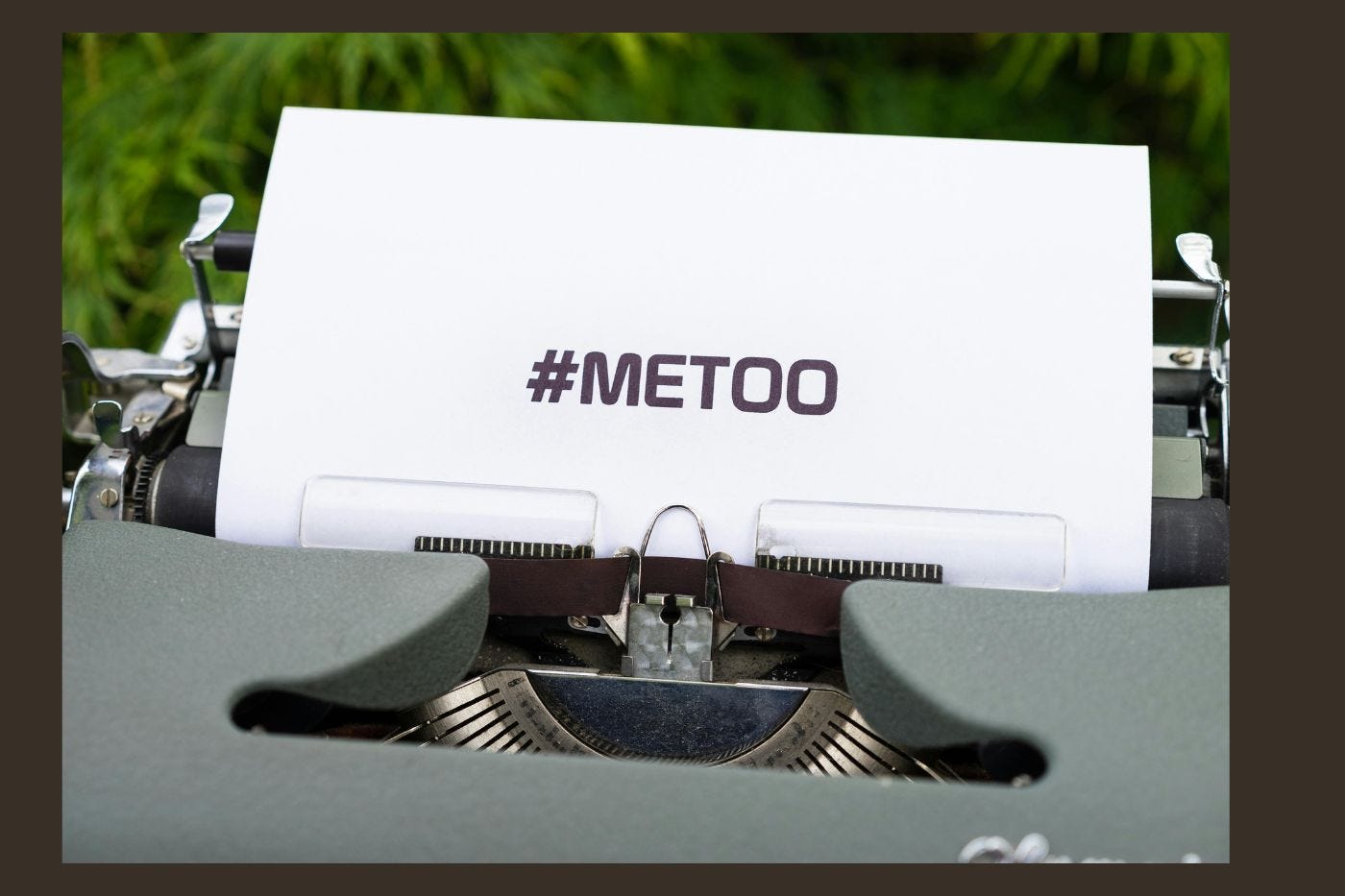
I immediately flashed back to what is in some ways comparable: the #metoo movement. That informed my reply:
“Calling out elder abuse doesn’t make older authors deluded or demented any more than calling out rape culture makes women sluts.”
And therein lies the problem. The more I thought about it, the more similarities I saw. (And I should add, just as #metoo included those of any gender who were sexually harassed or assaulted, the elder abuse of older authors is not gender specific.)
All of this got me thinking about the #metoo experiences I had but never shared. Partly that was because it was before social media. But if I’m honest, it was also because of the stigma. So I’m going to do it now.
This happened when I was in my twenties. I was working on a research project with several other grad students. One was auditing a class by a young professor. I don’t remember what the class was because I never registered for or attended it. But I did hear that she went on a date with the professor. As I recall, they slept together, it didn’t go well, and then she refused to go out with him again.
All that was on the periphery of my awareness… until I got my transcript for the semester. All our grades at the time were pass/fail, and I had one fail. It was from the professor of the class my friend audited. He gave her a fail too.
After we compared notes and realized this was his payback from no more sex, we went to the dean. The fails were removed. What I remember most vividly, though, was the humiliation of sitting there, having to explain in detail how that fail ended up on my record, to defend against the implication that we invited this abuse. Even now I feel squeamish recounting it, like Do I really want to share this?
But I do. Because I see the connection. Abuse is abuse at any age. And it feels demeaning. If you’d asked my colleague and me to characterize ourselves, we likely would said we were “empowered women.” Yet we were still vulnerable to the power dynamics operating against us.
Obviously agents and those who run writers conferences aren’t looking for sexual favors, but they can nonetheless wield power and take advantage of writers’ vulnerabilities. As authors—regardless of our age in this moment—one step toward correcting this dynamic is to become aware of it and be willing to admit its impact.
I agree with your comparison to the #MeToo movement. The reminder about the risks and potential for exploitation in both situations is an important one. Thanks for sharing.